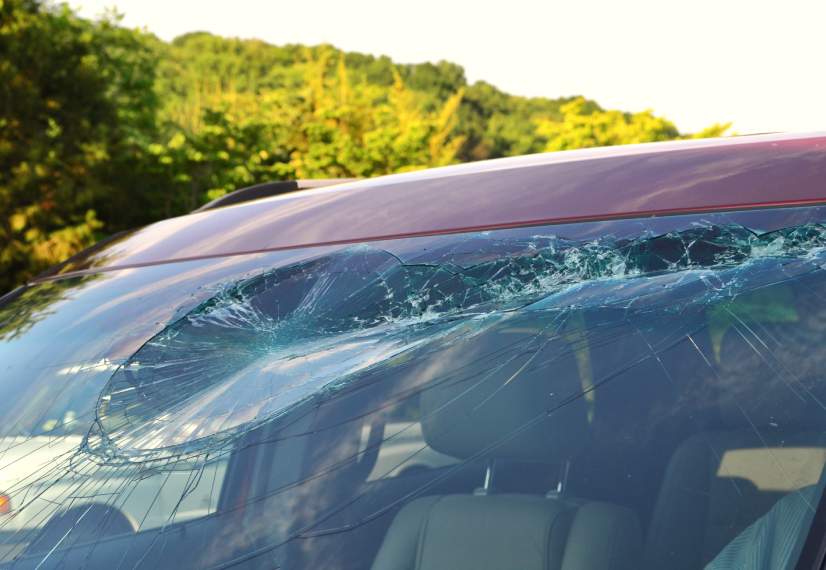
That crack that showed up after a highway rock strike might look small enough to ignore. But in Massachusetts, whether you can legally keep driving on it depends on exactly where it is, how big it is, and whether it’s still growing. Here’s what the law actually requires, what happens if you get pulled over, and how to know if you need a repair or a full replacement.
What Massachusetts Law Actually Says
Massachusetts doesn’t have a blanket ban on driving with any windshield damage. Instead, the rules — set out in the state’s vehicle inspection regulations (540 CMR 4.00) — focus on whether the damage interferes with the driver’s ability to see the road clearly. A tiny chip near the edge of the glass is treated very differently than a crack running through your direct line of sight.
That said, officers do have discretion. If a crack is visibly obstructing your view, you can be pulled over and cited for it regardless of whether you’re due for inspection. Repeat citations can escalate from a fine to a license suspension, so “it’s just a small crack” isn’t much of a defense if a trooper can see it from outside the car.]
The “Critical Viewing Area” Is What Really Matters
The single biggest factor isn’t the size of the crack — it’s the location. Massachusetts inspectors pay closest attention to the critical viewing area, generally defined as the zone directly in front of the steering wheel, roughly two inches down from the top of the glass and one inch in from the sides. Any damage here is judged far more strictly than the same damage near a corner of the windshield.
Massachusetts Windshield Damage Limits
| Location | What’s Allowed |
|---|---|
| Inside the wiper-swept area | No cracks longer than 1 inch; chips no larger than a quarter |
| Outside the wiper-swept area | No cracks or fractures longer than 2 inches |
| Anywhere on the windshield | No damage that obstructs the driver’s clear view of the road |
| Chips/star breaks | Under ¾ inch is generally acceptable if not within 3 inches of another crack |
| Multiple cracks | If more than one crack reaches into the critical viewing area, it’s an automatic fail |
If your damage exceeds any of these thresholds, it’s not a judgment call — it will fail inspection and can draw a citation on the road.
Cracked Windshield and Your Inspection Sticker
If a cracked windshield causes your car to fail inspection, you’ll receive a Red R rejection sticker. From there:
- You have 60 days to repair the damage and return for a re-inspection.
- Driving with a Red R sticker for a safety failure is illegal even during that 60-day window — officers can still cite you.
- Once the 60 days have elapsed without repair, your vehicle is considered uninspected, which carries its own fines.
Is It Actually Safe to Drive With a Cracked Windshield?
Even when a crack is technically within legal limits, “legal” and “safe” aren’t the same thing. A compromised windshield:
- Loses structural integrity that helps support the roof in a rollover
- Can spread suddenly with temperature swings — very common during New England’s freeze-thaw winters
- May not properly deploy the passenger airbag, which uses the windshield as a backstop in many vehicles
- Can catch sunlight or headlight glare at the crack line, creating a momentary glare hazard
A crack that starts as a two-inch line outside the wiper area today can be a foot long by next week once temperatures swing. Waiting rarely saves money.
Repair or Replace? How to Know Which You Need
As a rule of thumb:
- Chips smaller than a quarter or cracks under 3 inches away from the edge and outside the critical viewing area can usually be repaired in under 30 minutes.
- Cracks longer than 3 inches, damage at the edge of the glass, or anything in the critical viewing area typically requires full replacement.
- Any vehicle with driver-assist features (lane departure warning, automatic emergency braking, adaptive cruise control) needs ADAS calibration after a windshield replacement — skipping this step can leave those safety systems misaligned, even if the new glass looks perfect.
The Bottom Line
If your crack is small, off to the side, and not growing, you may be able to legally drive on it in Massachusetts — for now. But if it’s anywhere near your direct line of sight, longer than the state’s size limits, or spreading, it’s both a legal risk and a safety risk. Getting it looked at before it becomes an inspection failure (or a full replacement) is almost always the cheaper path.
We provide mobile windshield repair and replacement across Worcester and the surrounding area, so your car doesn’t need to come to us — we come to you, including full ADAS recalibration when it’s needed.
FAQs
Is it illegal to drive with a cracked windshield in Massachusetts?
It depends on the size and location of the crack. If it obstructs the driver’s critical viewing area or exceeds the state’s size limits, it’s illegal and can result in a citation, even outside of inspection season.
Will a cracked windshield automatically fail my Massachusetts inspection?
Not automatically — but any crack in the critical viewing area, longer than 1 inch in the wiper-swept area, or longer than 2 inches anywhere else, will fail inspection.
How long do I have to fix a windshield after a failed inspection?
You have 60 days to repair the damage and return for a re-inspection. Driving on a Red R rejection sticker during that period is still against the law if the defect is a safety issue.
Does insurance cover windshield repair in Massachusetts?
Massachusetts requires insurers to offer low-deductible ($0 or $100) glass coverage as part of comprehensive policies, though drivers must opt in — it isn’t automatic.
Can a small chip really turn into a big crack?
Yes. Temperature swings, potholes, and even slamming a car door can cause a small chip to spread rapidly, especially during New England winters.